
Hormann Supramatic E Instruction Manual: A Comprehensive Guide
This comprehensive guide details the Hormann Supramatic E, offering installation, configuration, operation, and maintenance insights. PDF manuals, wiring diagrams, and troubleshooting are included for optimal performance.
Hormann, a leading European manufacturer, provides quality gates and drives, exclusively through authorized dealers in Russia and globally.
The Hormann Supramatic E is a sophisticated gate operator designed for both residential and commercial applications, renowned for its reliability and smooth operation. As a product of the esteemed German manufacturer Hormann, a European leader in door and gate technology, it represents a commitment to quality and innovation.
This operator is exclusively distributed through authorized Hormann dealers, ensuring professional installation and support. The Supramatic E is compatible with various gate types, offering versatility for different property configurations. Understanding its features requires consulting the official instruction manual, often available as a PDF download from authorized distributors.
This guide will navigate you through the intricacies of the Supramatic E, from initial setup and programming to regular maintenance and troubleshooting. It’s crucial to familiarize yourself with the safety precautions outlined in the manual before commencing any work. The Supramatic E aims to provide secure and convenient gate access, enhancing property security and ease of use.
Key Features and Benefits
The Hormann Supramatic E boasts several key features contributing to its superior performance. Its robust design ensures long-lasting durability, even in demanding conditions. The operator offers smooth, quiet operation, enhancing the user experience and minimizing disturbance. Programming is simplified through user-friendly controls, allowing for customized settings to suit individual needs.
Benefits include enhanced security through adjustable force settings and integrated safety features. Compatibility with photocells and external control systems expands functionality and convenience. Access to PDF instruction manuals facilitates easy setup and maintenance.
Furthermore, the Supramatic E’s potential for integration with smart home systems provides modern, automated gate control. Hormann’s commitment to quality, backed by comprehensive warranty coverage, offers peace of mind; These features combine to deliver a reliable, secure, and convenient gate operation solution.
Safety Precautions
Prior to installation and operation of the Hormann Supramatic E, carefully review all provided documentation, including the PDF instruction manual. Disconnect power before performing any maintenance or adjustments to prevent electrical shock. Ensure the gate’s travel path is clear of obstructions – people, vehicles, or objects – during operation.
Never attempt to repair or modify the operator without proper training and authorization. Regularly inspect all safety devices, such as photocells, to confirm they are functioning correctly. Adjust force settings cautiously, avoiding excessive force that could cause injury.
Keep the area around the gate operator clean and free of debris. Supervise children and pets when the gate is in operation. Adherence to these precautions is crucial for safe and reliable operation, preventing potential hazards and ensuring longevity of the system.
Installation Process
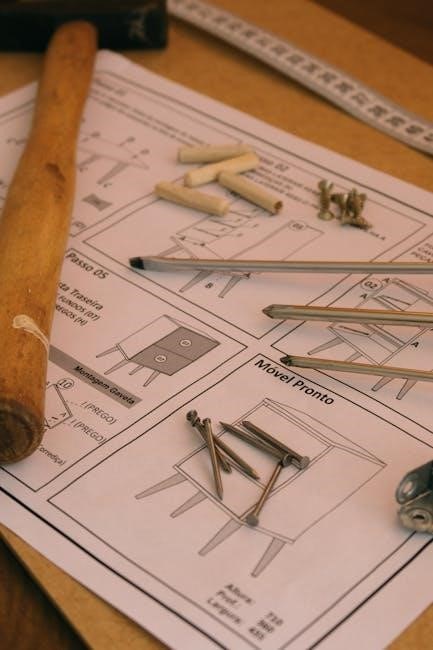
Proper installation requires a component check, secure mounting of the Supramatic E unit, connecting it to the gate, and careful wiring according to the diagram.
Unboxing and Component Check
Upon receiving your Hormann Supramatic E, carefully inspect the packaging for any signs of damage during transit. Once opened, meticulously verify all components against the included parts list. Essential items typically include the Supramatic E motor unit, mounting brackets, a control panel, remote controls, and a comprehensive instruction manual – often available as a PDF file.
Ensure the presence of all necessary hardware, such as screws, bolts, and fixings. Check for any missing or damaged parts immediately and contact your Hormann dealer or support if discrepancies are found. Retain the original packaging materials for potential returns or warranty claims. Familiarize yourself with each component before proceeding to the mounting stage, referencing the manual for detailed illustrations and descriptions. A thorough component check prevents delays and ensures a smooth installation process.
Mounting the Supramatic E Unit
Securely mounting the Hormann Supramatic E is crucial for reliable operation. Begin by selecting a suitable location, ensuring sufficient space and accessibility for maintenance. Utilize the provided mounting brackets, attaching them firmly to a stable surface – typically the garage ceiling or wall – using appropriate fixings. Refer to the instruction manual’s diagrams for precise bracket positioning and alignment.
Carefully lift the Supramatic E unit into position and attach it to the mounted brackets. Verify the unit is level and securely fastened before proceeding. Double-check all connections to prevent vibrations or movement during operation. Ensure adequate clearance around the unit for wiring and adjustments. Proper mounting minimizes noise and maximizes the lifespan of your Hormann gate operator.
Connecting the Motor to the Gate
Establishing a secure connection between the Supramatic E motor and your gate is paramount. Begin by disengaging the gate’s manual operation to prevent accidental movement during the connection process. Utilize the appropriate connecting components – typically a chain, toothed rack, or direct drive – as specified in the manual for your gate type.
Carefully align the motor’s drive mechanism with the gate’s corresponding component, ensuring proper engagement. Securely fasten all connections, verifying they are tight and free from play. Test the connection by gently attempting to move the gate with the motor disengaged; there should be no slippage. Refer to the wiring diagram for correct electrical connections, and always prioritize safety during this step.
Wiring Diagram Explanation
The Hormann Supramatic E wiring diagram is crucial for correct installation and operation. It details the connections for power supply, safety devices (photocells), control systems, and accessories. Identify the terminal blocks for each component – typically labeled clearly on both the diagram and the motor unit.
Pay close attention to wire colors and their corresponding functions. Ensure the power supply voltage matches the motor’s requirements. Photocell wiring is critical for safety, preventing gate closure if obstructions are detected. External control systems, like keypads or access control, connect to designated terminals. Always disconnect power before making any wiring changes, and double-check all connections before restoring power.

Configuration and Programming
Proper configuration involves setting travel limits, programming remote controls, adjusting force settings, and mastering the multi-function button for seamless operation and safety.
Setting Travel Limits
Precisely defining the open and close travel limits is crucial for safe and reliable operation of your Hormann Supramatic E gate operator. This process ensures the gate doesn’t overtravel, preventing potential damage to the gate itself, surrounding structures, or vehicles.
Access the programming menu via the multi-function button, navigating to the travel limit settings. Carefully adjust the upper and lower limits, observing the gate’s movement during each adjustment. Incremental changes are recommended for accuracy.
Pay close attention to the gate’s full open and closed positions, ensuring sufficient clearance and preventing obstructions. Test the limits multiple times after initial setup, verifying smooth and accurate operation. Incorrectly set limits can compromise safety and functionality, so meticulous attention to detail is paramount.
Refer to the official Hormann Supramatic E manual (available as a PDF) for detailed, step-by-step instructions and diagrams specific to your model.
Programming Remote Controls
Adding remote controls to your Hormann Supramatic E system provides convenient gate operation. Begin by entering the programming mode through the operator’s control panel, typically accessed using the multi-function button. Consult the official PDF manual for the precise sequence, as it may vary slightly depending on the model.
Once in programming mode, press and hold the desired button on the new remote control until the gate operator acknowledges the signal – usually indicated by a flashing light or audible beep. Repeat this process for each additional remote you wish to pair with the system.
Always test each programmed remote to confirm functionality before relying on it for daily use. Be mindful of potential interference and ensure the remote’s battery is sufficiently charged for optimal performance. Refer to the manual for troubleshooting tips if programming fails.
Adjusting Force Settings
Proper force adjustment is crucial for safe and reliable operation of your Hormann Supramatic E gate operator. Incorrect settings can lead to operational issues or, more importantly, safety hazards. Access the force adjustment settings through the operator’s control panel, referencing the detailed instructions in the user manual (PDF).
Begin with the lowest force setting and gradually increase it until the gate reliably opens and closes under normal conditions. Regularly test the gate’s response to obstructions using the safety features – photocells or edge sensors – to ensure they function correctly.
Avoid excessive force, as this can damage the gate or cause injury. Always prioritize safety and consult a qualified technician if you are unsure about adjusting these settings; Detailed diagrams and explanations are available within the official Hormann documentation.
Using the Multi-Function Button
The Hormann Supramatic E’s multi-function button serves as a central control point for various operations. A short press typically initiates a normal open/close cycle. Holding the button for a longer duration can activate learning modes or access advanced settings, as detailed in the instruction manual (PDF).
This button is also vital for programming remote controls and adjusting travel limits. The manual provides a step-by-step guide on utilizing the button’s different functions, including LED indicator interpretations. It’s essential to understand these signals for successful programming and troubleshooting.
In emergency situations, the multi-function button can be used to manually override the automated system. Refer to the safety precautions section of the manual for proper emergency procedures and ensure you understand its operation before needing it.

Operation and Maintenance
Regular operation and maintenance, guided by the manual, ensure longevity. PDF instructions detail daily procedures, schedules, troubleshooting, and winterization for optimal performance.
Daily Operation Procedures
Ensuring smooth and safe daily operation of your Hormann Supramatic E gate operator requires a few simple checks. Before each use, visually inspect the gate’s path for any obstructions – vehicles, debris, or people. Confirm the photocells are clean and functioning correctly; these are crucial safety components.
Activate the gate using your programmed remote control or the multi-function button. Listen for any unusual noises during operation, such as grinding or straining, which could indicate a potential issue. Observe the gate’s full range of motion, verifying it opens and closes completely without hesitation.
Avoid forcing the gate if it encounters resistance. Utilize the emergency release mechanism only when absolutely necessary and re-engage it immediately after addressing the problem. Refer to the instruction manual’s safety section for detailed guidance on emergency procedures. Consistent adherence to these procedures will maximize the lifespan and reliability of your Hormann Supramatic E system.
Regular Maintenance Schedule
Maintaining your Hormann Supramatic E requires a scheduled approach to ensure longevity and optimal performance. Every six months, inspect and tighten all mounting bolts and brackets. Lubricate the gate’s hinges, rollers, and the operator’s chain (if applicable) with a suitable, non-abrasive lubricant.
Annually, thoroughly examine the wiring connections for corrosion or damage, and clean the photocell lenses with a soft cloth. Check the travel limits and force settings, adjusting as needed based on seasonal changes. Inspect the remote control batteries and replace them if necessary.
Review the instruction manual for specific maintenance recommendations related to your gate type. Professional servicing is recommended every two years to identify and address potential issues before they escalate. Following this schedule will help prevent costly repairs and ensure continued reliable operation of your Hormann gate system.
Troubleshooting Common Issues
If your Hormann Supramatic E isn’t functioning correctly, begin with simple checks. If the gate doesn’t respond, verify remote control batteries and ensure the antenna is unobstructed. A flashing light often indicates an obstruction detected by the safety sensors – check for debris or misalignment.
For slow operation, inspect the chain or drive system for lubrication needs. If the gate reverses unexpectedly, adjust the force settings carefully, referencing the instruction manual. Wiring issues can cause erratic behavior; inspect connections for looseness or corrosion.
Consult the manual’s troubleshooting section for error codes and their meanings. If problems persist, contact a qualified Hormann service technician. Do not attempt complex repairs yourself, as this could void the warranty and create safety hazards.
Winter Operation Considerations
During winter months, the Hormann Supramatic E requires specific attention. Extreme cold can affect the motor oil’s viscosity, potentially slowing operation. Consider using a cold-weather lubricant specifically designed for gate operators. Snow and ice accumulation can obstruct safety sensors, causing malfunctions; regularly clear these areas.
Ensure the gate’s travel path is free of snowdrifts to prevent strain on the motor. Check the wiring for ice buildup, which can cause shorts. Lowering force settings slightly can help the gate overcome resistance from snow and ice, but avoid compromising safety.
Regularly inspect for corrosion caused by road salt. Refer to the instruction manual for recommended winter maintenance procedures to ensure reliable operation throughout the colder season.

Advanced Settings
Explore advanced features like photocell integration, external control systems, and smart home connectivity for enhanced functionality and customized automation with the Supramatic E.
Photocell Integration
Photocell integration significantly enhances the safety features of your Hormann Supramatic E gate operator. These sensors create an invisible beam across the gate’s opening, preventing closure if an obstruction is detected. This is crucial for protecting people, pets, and vehicles.
Connecting photocells involves wiring them to the designated terminals on the Supramatic E control unit – refer to the wiring diagram for precise connections. Proper configuration within the operator’s menu is essential; this typically involves selecting the correct operating mode for the photocells (e.g., light curtain or single beam).
Testing the system after installation is paramount. Ensure the gate reverses direction immediately upon breaking the beam. Adjust the sensitivity settings if needed to avoid false triggers due to sunlight or moving objects. Regularly inspect the photocells for cleanliness and alignment to maintain optimal performance and safety.
External Control Systems
The Hormann Supramatic E offers compatibility with various external control systems, expanding its functionality beyond standard remote operation. These systems can include wired keypads for pin-code access, card readers for authorized entry, and digital video intercoms for visual verification.
Integrating these systems typically involves connecting them to the Supramatic E’s designated terminals for external control signals. The operator’s menu allows you to configure how these signals interact with the gate’s operation – for example, assigning a specific input to open or close the gate.
Careful consideration should be given to the voltage and current requirements of the external control system to ensure compatibility with the Supramatic E. Consult the documentation for both systems to ensure proper wiring and configuration. Thorough testing is vital after installation to verify seamless operation.
Connecting to Smart Home Systems
The Hormann Supramatic E can be integrated into popular smart home ecosystems, enabling voice control and automated operation. Compatibility is often achieved through dedicated smart home interfaces or utilizing relay contacts for custom integrations. Systems like Google Assistant, Amazon Alexa, and Apple HomeKit can be linked.
Integration typically involves connecting the Supramatic E to a smart home hub via a compatible interface. This allows for remote control through a smartphone app, voice commands, and the creation of automated routines – for example, automatically opening the gate at a specific time or upon arrival home.
Ensure the smart home system and the Supramatic E are on the same network. Refer to both device manuals for specific pairing instructions and security considerations. Regular software updates are crucial for maintaining compatibility and security.

Technical Specifications
The Hormann Supramatic E boasts detailed specifications including power requirements, dimensions, weight, and operating temperature ranges, ensuring optimal performance and installation suitability.
Power Requirements
Understanding the power requirements for the Hormann Supramatic E is crucial for safe and efficient operation. This gate operator typically functions on a 230V AC power supply, standard in many regions. However, precise voltage tolerances and acceptable frequency ranges (usually 50Hz) should be verified via the specific model’s documentation.
The Supramatic E exhibits relatively low power consumption during standby mode, contributing to energy efficiency. However, during gate operation – opening, closing, and reversing – power demand increases significantly. It’s essential to ensure the electrical circuit supplying the operator is adequately rated to handle these peak loads, preventing potential tripping of circuit breakers or damage to the motor.
Proper grounding is also paramount for safety and to protect the electronic components. Always consult a qualified electrician for installation and to confirm compliance with local electrical codes and regulations. Incorrect wiring or insufficient power supply can void the warranty and create hazardous conditions.
Dimensions and Weight
Accurate knowledge of the Hormann Supramatic E’s dimensions and weight is vital for proper installation and ensuring sufficient structural support. While specific measurements vary slightly depending on the model and any included accessories, the unit generally presents a compact design to facilitate integration into diverse gate systems.
Typical dimensions include a length of approximately 360mm, a width of 150mm, and a height around 280mm. The weight usually falls within the range of 6-8 kilograms. These figures are approximate; always refer to the official technical specifications provided with your specific Supramatic E unit for precise details.
Consider these measurements when planning mounting locations and verifying compatibility with existing gate infrastructure. Adequate space must be allocated for wiring connections and maintenance access. The weight is a critical factor for selecting appropriate mounting hardware and ensuring the gate’s supporting structure can safely bear the load.
Operating Temperature Range
The Hormann Supramatic E is engineered for reliable performance across a broad spectrum of environmental conditions. However, understanding its operating temperature range is crucial for maintaining optimal functionality and preventing potential damage. Generally, the unit is designed to operate effectively within temperatures ranging from -20°C to +60°C (-4°F to 140°F).
Operating outside this specified range may lead to reduced performance, such as slower operation or decreased battery life. In extremely cold temperatures, condensation can form internally, potentially causing corrosion. Conversely, excessive heat can overheat internal components.
For regions experiencing temperatures beyond these limits, consider implementing protective measures like insulation or supplemental heating/cooling. Always consult the official Hormann documentation for specific recommendations tailored to your climate. Proper temperature management ensures the longevity and consistent operation of your Supramatic E gate operator.

Warranty Information
Hormann provides comprehensive warranty coverage for the Supramatic E, detailing claim procedures and support contact information. Review the manual for specific terms and conditions.
Warranty Coverage Details
Hormann’s warranty for the Supramatic E operator is designed to protect against defects in materials and workmanship under normal use. The standard warranty period typically covers the motor unit itself for a specified duration, often ranging from two to five years, depending on the specific model and regional regulations.
Components like remote controls, photocells, and other accessories may have a shorter warranty period, usually one to two years. This warranty does not cover damage resulting from improper installation, misuse, neglect, unauthorized modifications, or acts of nature.
Crucially, the warranty is valid only if the installation and maintenance are performed by qualified personnel, adhering to Hormann’s guidelines. Maintaining records of installation and servicing is highly recommended for streamlined claim processing. Refer to the official Hormann documentation for the complete and most up-to-date warranty terms.
Claim Procedures
To initiate a warranty claim for your Hormann Supramatic E, first contact the authorized Hormann dealer where you purchased the unit. They will serve as the primary point of contact and guide you through the process. You’ll need to provide proof of purchase, including the original invoice and date of installation;
Detailed documentation of the issue is essential – include clear photographs or videos demonstrating the defect. The dealer may request a technical assessment by a qualified technician to verify the claim. Hormann reserves the right to inspect the faulty unit or component.
Approved claims typically result in repair or replacement of the defective part, at Hormann’s discretion. Shipping costs for returned items may be the responsibility of the claimant, depending on the warranty terms. Always retain copies of all correspondence and documentation related to your claim.
Contacting Hormann Support
For direct assistance with your Hormann Supramatic E, begin by visiting the official Hormann website. Locate the “Support” or “Contact Us” section to find regional contact information. As Hormann operates primarily through dealers, your initial contact should ideally be with your local authorized distributor.
However, if you require direct manufacturer support, the website provides access to frequently asked questions (FAQs), downloadable manuals (including PDF versions), and troubleshooting guides. Look for online contact forms or email addresses dedicated to technical support.
Phone support may be available during business hours; check the website for specific numbers relevant to your location. When contacting support, have your Supramatic E model number and installation date readily available to expedite the process. Detailed descriptions of the issue will also be helpful.
Leave a Reply
You must be logged in to post a comment.